Gamified Language Learning Program
Empowering Children in Marginalized Communities Through Motion-based Language Learning
Healthcare • EHR Integration • Web App
COMPANY
Startup MVP / Self-Initiated Project
MY ROLE
Founder/Project Manager
DURATION
12 months
Tools
Unity, Microsoft Kinect, Adobe Illustrator/Photoshop
Background
From Teaching in Rural Classrooms to Designing for Change
While working as an elementary school teacher in a rural town in South Korea, I observed how limited educational resources directly affected students’ engagement and learning outcomes. This experience shaped my perspective on how thoughtful design can bridge systemic gaps and create more equitable learning environments.
Project Initiation
Turning a Classroom Insight into a Government-Funded Startup
Based on my observations in rural classrooms, I initiated a startup to develop an interactive educational tool, securing government funding and leading a cross-functional team of two developers and two designers. I managed the project end-to-end—from concept and prototyping to delivery—within a six-month timeline and a $50K budget.

Organizations that sponsored this program
User Insights
Physical Engagement Improves Learning and Retention
In rural schools with limited technology and internet access, motion-based engagement proved especially valuable in keeping students focused and confident.
Through direct observation while teaching English to children aged 6–10, I learned that physical activity and play-based learning significantly increased attention and motivation.

Core Concept
Gamified Language Learning Through Motion and Play
To address the challenges in rural classrooms, I designed a motion-sensor English learning program that combines physical movement with storytelling.
Instead of teacher-led lessons, one facilitator guides children as they collaborate, move, and solve challenges—learning English naturally through play and discovery.
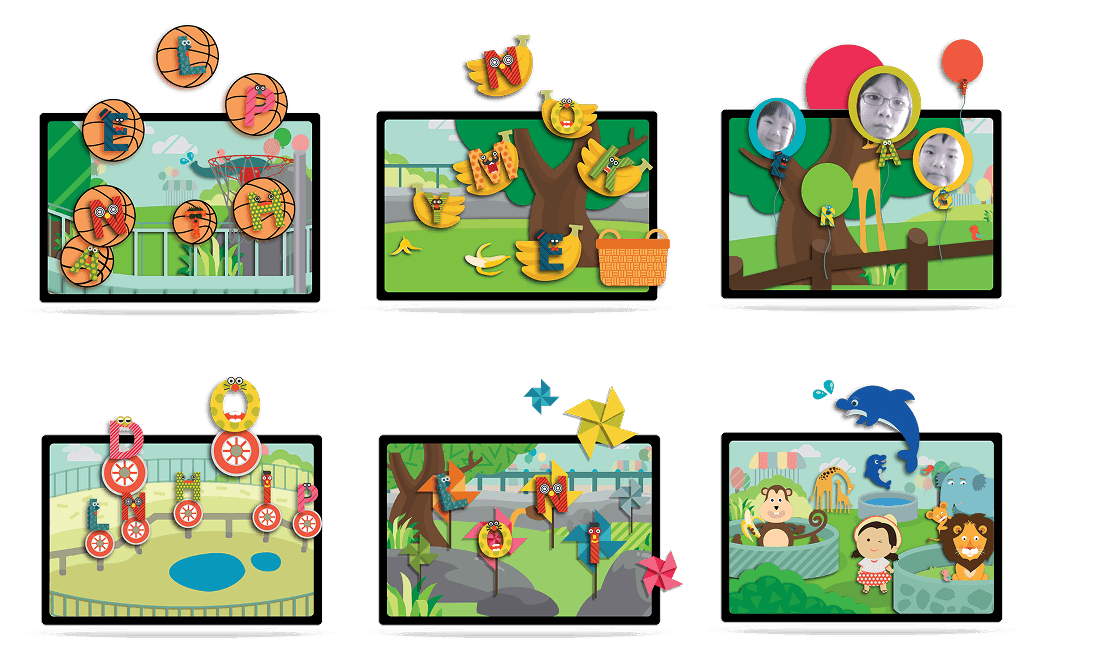
Interactive alphabet characters responding to users’ movements in real time.
Core Concept
Activity Modules
The activity module consists of five interactive experiences integrated into the storytelling:
Voice Recognition – Users speak target words and receive responsive feedback.
Face Mapping – Users' faces appear on the display for personalized interaction.
Movement-Based Interactions – All elements dynamically respond to users’ gestures